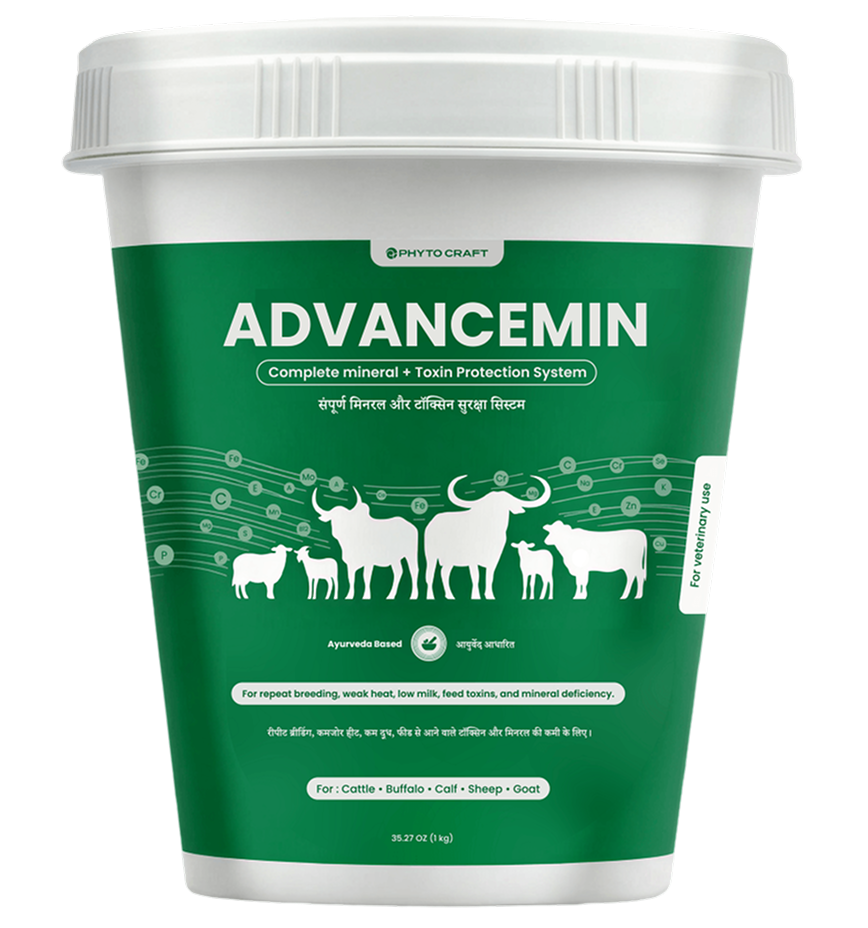
Complete Mineral Restoration + Toxin Protection System
AdvanceMin is a complete mineral restoration system — built for the animal whose body is running on depleted reserves while the farm continues to demand production. After illness, treatment, or sustained stress, the mineral balance that governs reproduction, immunity, bone strength, and milk performance collapses quietly and stays collapsed until something addresses it systematically. AdvanceMin restores the full macro and trace mineral spectrum, actively binds and removes feed-derived toxins that block mineral absorption, and rebuilds the biological foundation that determines whether the animal performs, breeds, and stays healthy.
Heat cycles are weak or irregular. The animal goes into heat but does not conceive. Milk is consistently below what the breed should give. The calf is growing slowly. No single obvious disease. Just persistent underperformance the farmer has started accepting as normal.
This is mineral depletion — and it is almost never diagnosed correctly because the animal does not collapse. It just quietly fails to function at its biological potential.
After illness, treatment, or sustained high production, macro minerals — calcium, phosphorus, magnesium — and trace minerals — zinc, copper, manganese, selenium, iodine, iron, cobalt — are drawn down faster than diet replenishes them. This deficit does not announce itself with a visible symptom. It expresses as weak heat, repeat breeding, low milk, slow calf growth, and reduced immunity.
Compounding this is a problem most mineral supplements do not address: feed-derived toxins. Mycotoxins and aflatoxins in stored fodder physically occupy the same absorption sites as essential minerals in the gut — blocking them from entering the bloodstream. You give the mineral. The toxin takes its place. The animal receives nothing.
Left unaddressed, this mineral-toxin interference cycle becomes self-sustaining. Each illness depletes reserves further. Each production cycle draws the animal deeper into deficit.
Diet alone cannot replace what illness, fever, and high production demand withdraws. The deficit accumulates silently across multiple production cycles.
Zinc, copper, manganese, and selenium govern hormonal signalling for heat expression, ovulation, and embryo survival. Their depletion is the hidden driver of repeat breeding that no hormonal intervention can permanently fix.
Mycotoxins and aflatoxins in stored fodder occupy the same receptor sites as minerals in the gut. Supplementing without removing this interference delivers nothing. The toxin takes the mineral's place every time.
Each illness, each treatment, each calving draws down what was never fully restored. After three or four cycles, the animal is performing at a fraction of its biological potential — and the farmer has accepted it as the new normal.
Not general benefits. Specific biological restorations — each tied to an observable outcome the farmer will see.
Skeletal, metabolic, and neuromuscular systems
Immune, reproductive, and enzymatic systems
Reproductive hormonal axis and uterine environment
Gastrointestinal absorption pathway
Mammary metabolic system
Skeletal system and connective tissue
PhytoCraft formulations are not ingredient lists. They are systems — each complex selected for a specific biological function, each validated through Ayurvedic therapeutic science and field outcomes. We do not publish our formulations. We publish what they do.
Primary macro mineral reserves — calcium, phosphorus, and magnesium — in biologically available forms the depleted gut can absorb.
Addresses the structural and metabolic mineral foundation that governs muscle function, nerve signalling, and skeletal integrity simultaneously — in forms that bypass the conversion barriers affecting standard inorganic mineral sources.
Enzyme function, immune competence, thyroid performance, and reproductive hormonal signalling — all trace-mineral dependent.
Delivers the essential trace mineral spectrum in chelated forms that improve absorption efficiency and tissue utilisation. Trace mineral deficiency is the hidden driver of infertility, immunosuppression, and poor production that macro mineral supplementation alone cannot resolve.
Mycotoxins, aflatoxins, and chemical residues at the gastrointestinal level — before they can occupy mineral absorption sites.
The formulation's most critical differentiating element. Physically binds feed-derived toxins and removes them before systemic entry — clearing the absorption pathway that makes all other mineral supplementation effective. This is what makes AdvanceMin a restoration system rather than a supplement.
Reproductive hormonal axis and uterine environment — the mineral substrate that hormonal signalling for heat expression, ovulation, and conception depends on.
Addresses repeat breeding and weak heat at the biological root — restoring the specific mineral requirements the reproductive system needs — rather than through hormonal intervention that treats the symptom without correcting the cause.
Gut microbial environment and intestinal absorptive integrity disrupted by illness, antibiotic therapy, and toxin load.
A mineral supplement without a functioning absorptive gut passes through. This complex restores the gut's capacity to receive and utilise what AdvanceMin delivers — ensuring the full mineral restoration effect is realised, not wasted.
Immune cell function, structural protein synthesis, and long-term resilience depleted by sustained trace mineral deficiency across multiple production cycles.
Addresses the chronic immunosuppression and physical fragility that develop when trace mineral deficiency is sustained — rebuilding the resilience that prevents recurrence of the conditions that caused the depletion in the first place.
Macro and trace mineral reserves depleted
Feed toxins block absorption pathways, compounding the deficit
Weak heat · Repeat breeding · Low milk · Poor immunity · Structural weakness
Binds toxins, opens pathways, delivers the complete mineral spectrum
Reproduction · Immunity · Milk performance · Structural strength
Removing the interference that makes ordinary mineral supplementation fail — clearing the pathway before delivering the mineral.
Standard inorganic mineral sources depend on a functioning gut for conversion — chelated forms bypass this requirement and restore levels faster.
Correcting reproductive failure at its biological root — the mineral depletion that disrupts ovulation quality, fertilization, and early embryo survival.
Without a functioning absorptive gut, no mineral formulation reaches its full effect. The probiotic complex ensures the infrastructure matches the delivery.
The minerals required for ovulation, fertilisation, and early embryo survival — zinc, manganese, selenium, copper — are depleted or blocked by toxin interference. AdvanceMin removes the toxin barrier and restores the reproductive mineral substrate.
When heat cycles are inconsistent or the animal shows little sign of heat, trace mineral deficiency affecting hormonal signalling is a primary consideration. AdvanceMin restores the mineral balance that hormonal rhythmicity depends on.
When feed quality is confirmed adequate but milk production remains below capacity — mineral depletion and toxin-mediated absorption interference are the most likely causes. AdvanceMin addresses both simultaneously.
Antibiotics disrupt gut flora and intestinal integrity — reducing the absorptive capacity for all minerals. Simultaneously, the illness requiring treatment has depleted reserves. AdvanceMin addresses both the depletion and the gut's reduced ability to absorb replacement minerals.
Seasonal feed changes and monsoon-period fodder carry elevated mycotoxin loads that block mineral absorption even when diet appears adequate. AdvanceMin's toxin-binding complex provides active protection during these high-risk periods.
Calves not growing at expected rate, showing leg weakness, or developing poor skeletal structure almost always have mineral deficiency as a contributing cause. AdvanceMin at the 50g calf dose provides the complete mineral foundation for healthy growth.
Diarrhoea, rumen acidosis, and any condition disrupting gastrointestinal integrity leave the gut unable to absorb minerals effectively even after clinical recovery. AdvanceMin's gut integrity complex rebuilds this absorptive capacity.
Cystic ovaries or confirmed luteal insufficiency require veterinary intervention — AdvanceMin supports but does not replace the required protocol. Use it alongside treatment, not instead of it.
Animals with compromised renal function cannot regulate mineral balance normally. Adding a complete mineral system without veterinary oversight can worsen electrolyte dysregulation.
Severe mycotoxin or chemical poisoning with acute neurological symptoms requires emergency veterinary care first. AdvanceMin supports recovery and prevention — it is not an emergency detoxification intervention.
What to look for in your animal after starting this product. Written for the farmer — specific and observable.
| Species | Dose | Frequency | Route |
|---|---|---|---|
| Cattle | 100 g | Once Daily | Oral — mix in feed |
| Buffalo | 100 g | Once Daily | Oral — mix in feed |
| Calf | 50 g | Once Daily | Oral — mix in feed or milk |
| Sheep | 50 g | Once Daily | Oral — mix in feed |
| Goat | 50 g | Once Daily | Oral — mix in feed |
| Camel | 100 g | Once Daily | Oral — mix in feed |
At what stage in the animal's recovery does AdvanceMin belong — and what happens if that stage is skipped.
AdvanceMin begins on the day the acute treatment course ends — or at the earliest possible point in a high-risk period such as a feed change, the monsoon season, or the pre-breeding window. For reproductive restoration specifically, it must begin at least 21 days before the intended breeding date. For post-illness mineral recovery, it begins the day after the final antibiotic or treatment dose.
AdvanceMin acts on the sustained mineral deficit and toxin interference stage — the extended period following illness or treatment where mineral reserves remain depleted and feed-derived toxins continue to block absorption pathways. This is not the acute emergency phase. It is the middle and longest stage of recovery — where the animal looks recovered but is biologically still running on empty. This stage can last weeks to months without intervention and is almost never addressed by standard veterinary treatment protocols.
Without systematic mineral restoration and toxin clearance at this stage, the animal enters a self-reinforcing deficit cycle — depleted minerals cannot be replaced because the absorption pathway remains blocked, and each subsequent illness or production demand depletes reserves further. The farmer sees repeat breeding, persistent low milk, and animals that require constant treatment for problems that keep returning without a clear cause. The root is never reached.
AdvanceMin's recovery window begins on Day 1 post-treatment and extends through the full mineral restoration arc — typically 30 to 45 days for animals with significant depletion. The completion signals are observable: heat cycles are regular and strong, conception is achieved, milk is consistent at or near normal capacity, body condition is improving, and the coat looks healthy. For animals in sustained high production or regularly exposed to high-toxin-load feed, AdvanceMin remains relevant as a continuous maintenance product — the toxin protection benefit is ongoing, not one-time.
Real questions from farmers and veterinarians — answered honestly and completely.
AdvanceMin is a complete mineral restoration and toxin protection system for livestock. It restores the full spectrum of macro and trace minerals depleted by illness, treatment, or sustained production stress — and it actively removes the feed-derived toxins that block mineral absorption and make ordinary supplementation ineffective. It addresses both the deficit and the interference that prevents it from being corrected.
Repeat breeding is one of the most common presentations of trace mineral deficiency in dairy cattle — particularly zinc, copper, and manganese deficiency affecting hormonal signalling, ovulation quality, and early embryo survival. AdvanceMin restores the mineral substrate the reproductive system needs. If the animal has been repeat breeding for more than two cycles, start AdvanceMin immediately and have your vet rule out any structural or hormonal cause alongside it.
Frequently yes. Mineral depletion affects the metabolic pathways that produce milk even when caloric intake is adequate. If the diet has not changed but production has dropped, and the animal is not sick or in late lactation, mineral deficiency and toxin interference are the most likely causes. AdvanceMin addresses both.
Feed toxins — mycotoxins and aflatoxins — are invisible chemicals produced by moulds in stored fodder, grain, and silage. In the gut, they physically occupy the same absorption sites as essential minerals — blocking zinc, copper, and selenium from entering the bloodstream even when the feed contains adequate amounts. The animal gets the toxin instead of the mineral. AdvanceMin binds these toxins in the gut and removes them before they can do this.
Most mineral mixtures deliver minerals in inorganic salt forms with variable and often low absorption rates — and none of them address the toxin interference problem. AdvanceMin delivers minerals in bioavailable forms, includes active toxin-binding components that clear the absorption pathway, and incorporates probiotic support to rebuild gut absorptive integrity. It is a restoration system, not a supplement.
Yes. The calf dose is 50g per day. Calves with poor growth, weak legs, or slow development almost always have mineral deficiency as a contributing cause. AdvanceMin at the calf dose provides the complete mineral foundation for healthy skeletal development and growth. For very young calves under one month, confirm with your veterinarian.
Give AdvanceMin and antibiotics at least 2 hours apart — not in the same feed portion at the same time. The toxin-binding components in AdvanceMin can also bind some antibiotic molecules in the gut if given simultaneously, reducing their bioavailability. Separate them in the feeding schedule and there is no issue.
Yes. AdvanceMin is appropriate for use during pregnancy. Pregnant animals have elevated mineral requirements — particularly for the developing calf's skeletal system. Using AdvanceMin during late pregnancy is a sound pre-calving mineral preparation protocol. Consult your veterinarian for a specific protocol if needed.
Reproductive mineral restoration takes time — the hormonal and ovarian systems need 21 days of consistent mineral supplementation before the full effect on oestrus expression and conception is measurable. Start AdvanceMin at least 21 days before the intended breeding date. Do not judge the product on a single cycle — evaluate after two complete cycles.
If low milk is caused by mineral depletion and toxin interference, improvement should be visible within 7 to 10 days of consistent use. If milk does not improve within 14 days, the cause may be something other than mineral depletion — mastitis, late lactation, or another condition — and veterinary assessment is needed.
Yes — trace mineral deficiency affecting reproductive cyclicity is common in small ruminants, particularly selenium and copper deficiency. AdvanceMin at the 50g dose for sheep restores the mineral substrate for normal oestrus expression. Note: do not exceed the recommended dose in sheep — they are more sensitive to copper toxicity than cattle
Yes — high-producing animals, animals in peak lactation, and animals exposed to high-toxin-load feed benefit from AdvanceMin as a continuous maintenance product. It is safe for long-term daily use. There are no dependency-creating actives and no synthetic chemicals that accumulate harmfully over time.
Start the day after the final antibiotic dose. Do not give them in the same feed portion on the same day. The sooner mineral restoration begins after the antibiotic course, the faster the gut flora recovers and the absorptive capacity rebuilds.
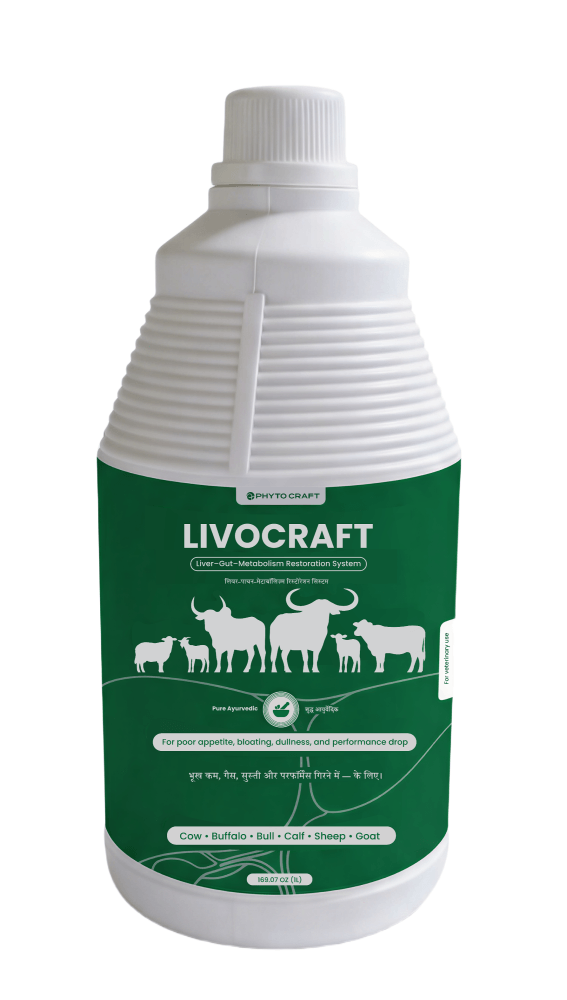
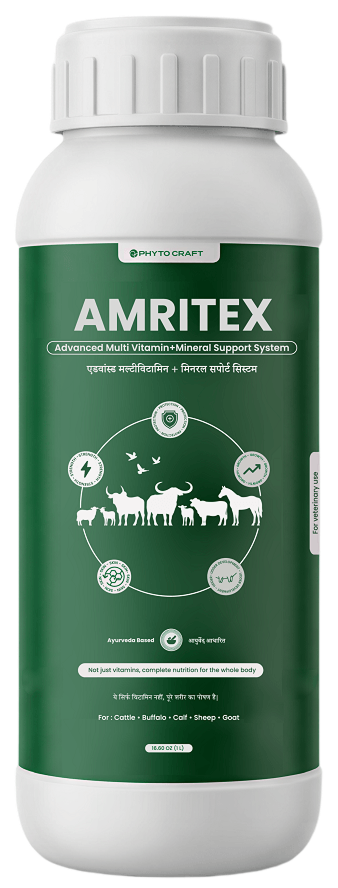
Yes — AdvanceMin is designed to be part of a recovery system. It works alongside LivoCraft, which restores the liver's capacity to process and distribute the minerals AdvanceMin delivers. It works alongside Amritex, which provides the vitamin cofactors that mineral absorption depends on. And it works alongside Dhenushakti, which specifically addresses the calcium-phosphorus layer while AdvanceMin addresses the trace mineral and toxin-protection layer.
Yes. Zinc deficiency is a primary risk factor for hoof health — zinc governs keratin synthesis, the structural protein of the hoof wall. Structural weakness remaining after foot rot treatment is often a sign of underlying zinc depletion. AdvanceMin restores the zinc and trace mineral levels that hoof structural recovery depends on.
AdvanceMin is built on an Ayurvedic foundation — the therapeutic classes used in the formulation are classical Ayurvedic categories validated through both traditional science and contemporary phytopharmacology. The toxin-binding components are validated through modern analytical methods for mycotoxin adsorption efficiency. Where Wisdom Is Validated, Not Diluted.
Yes. Post-febrile mineral depletion is one of the most common and least addressed causes of persistent underperformance after recovery. Two weeks after fever, the animal looks recovered but the mineral reserves depleted during the fever response have not been restored. Starting AdvanceMin now will still significantly improve outcomes compared to leaving the deficit unaddressed.
Mineral sufficiency — particularly adequate zinc, selenium, and copper — is one of the strongest determinants of immune competence in livestock. An animal with restored mineral balance is meaningfully more resistant to the infections it was previously prone to. AdvanceMin is not a treatment for disease, but it is a genuine contributor to preventing its recurrence.
Pregnancy loss in goats — particularly early embryonic death — is strongly associated with selenium and copper deficiency. If feed quality or infection has been ruled out, mineral deficiency is the next differential. Start AdvanceMin, ensure the goat dose does not exceed 50g, and have your vet assess selenium and copper status before the next breeding.
You often cannot see or smell mycotoxins in feed — they are invisible. The signs are indirect: animals on the same diet with different individual performances, poor response to mineral supplementation, reproductive failure without a clear cause, and general immunosuppression. If any of these patterns are present in your herd, toxin interference is a real possibility and AdvanceMin's toxin-binding complex is the appropriate response.
If you believe animal health deserves more depth, more honesty, and more compassion — you are already aligned with our purpose.