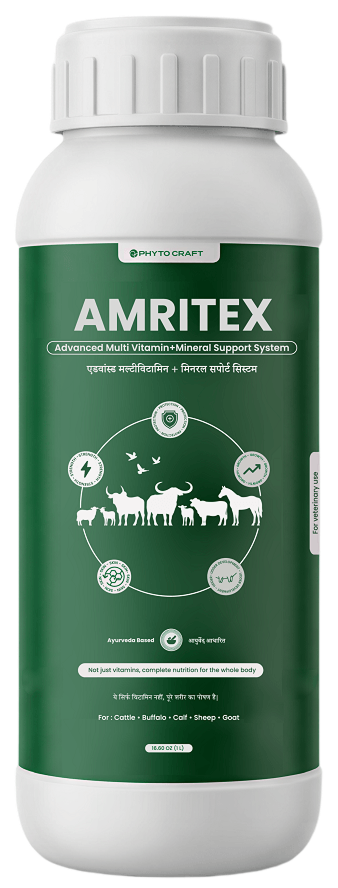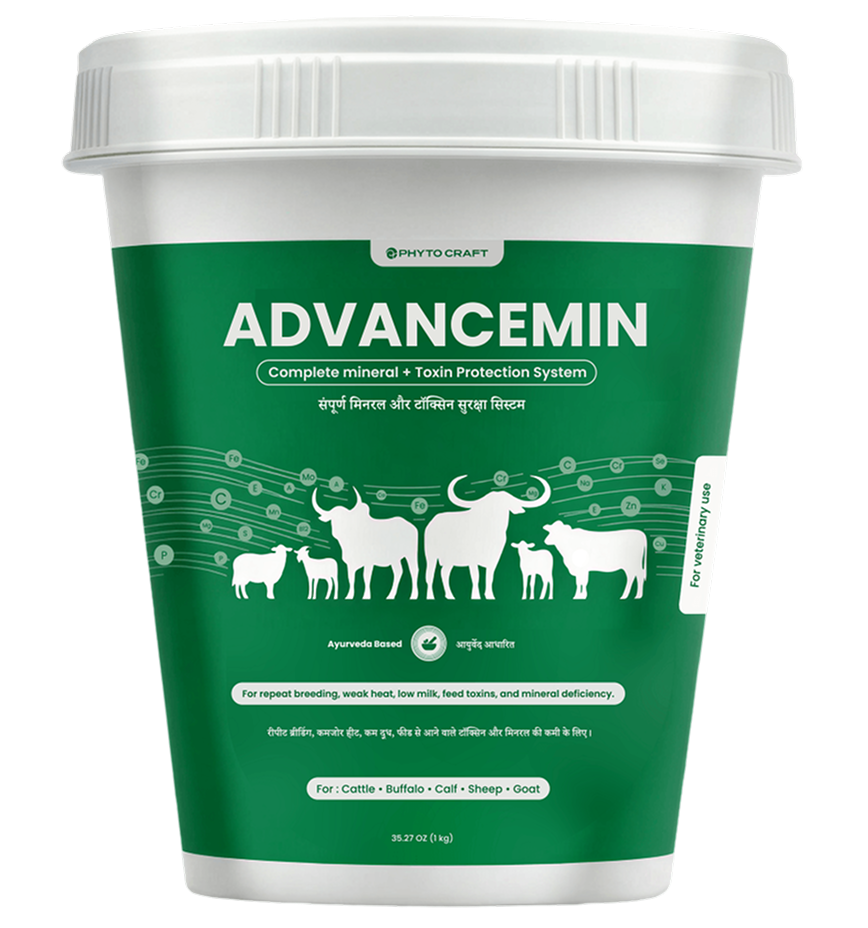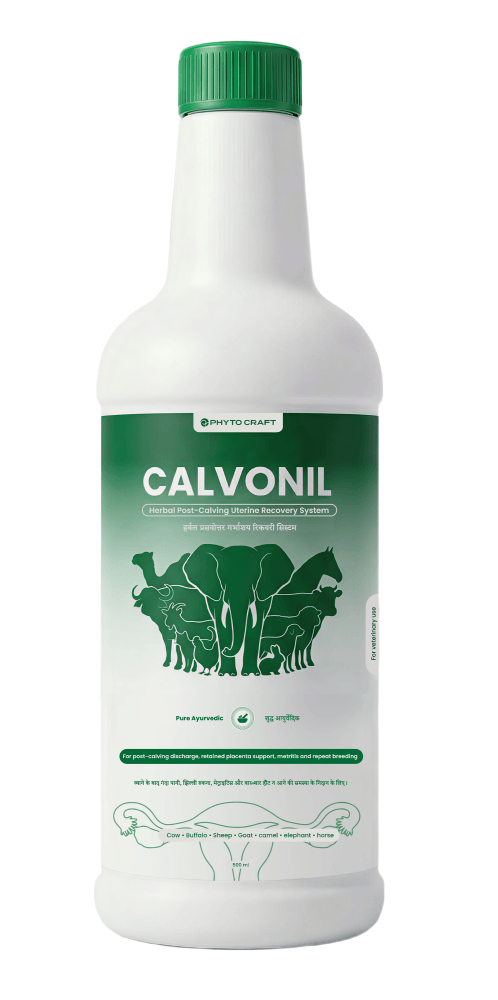
Calvonil

Calvonil

Herbal Post-Calving Uterine Recovery System

Calvonil is a pure Ayurvedic uterine recovery system for livestock — built for the biological stage after calving or uterine infection treatment where the uterus remains internally compromised even after the visible crisis has passed. After delivery, the uterus must cleanse itself, repair its lining, restore its muscular tone, and re-establish the hormonal rhythm that governs the next reproductive cycle. Without systematic support at this stage, retained discharge, incomplete tissue repair, and hormonal instability silently set the foundation for repeat breeding, irregular heat cycles, and persistent reproductive failure.

For Cow Buffalo Sheep Goat Camel
Pack 500 ml
Pure Ayurvedic
Field-Tested
Vet-Backed
Zero Fillers
The Problem This Product Was Built to Solve

The Calving Is Done. The Uterus Has Not Recovered.

The cow calved. The treatment is done. The animal is eating and producing. But something is not right with the reproduction. The next heat is late. Or the heat comes but the animal does not conceive. Or there is still discharge — sometimes foul-smelling, sometimes just persistent.

What the farmer is watching is a uterus that has not completed its biological recovery. What he may not realise is that this incomplete recovery will cost him the next pregnancy.

The uterus at delivery must do four things simultaneously — expel all retained fluids, heal the placental attachment sites, reduce back to its non-pregnant size through involution, and restore the hormonal environment for the next ovulation cycle. In many animals, one or more is incomplete.

Antibiotic treatment addresses the bacterial infection. It does not repair the damaged endometrial tissue. It does not restore uterine tone. It does not support the hormonal reset. The bacteria are gone. The biological damage remains.

A uterus that has not fully recovered from one calving is not ready for the next pregnancy. Every delayed conception is a delayed lactation cycle — and a direct cost that begins accumulating from the day the uterus failed to recover.

🧬

The endometrial surface is wounded at every placental attachment site

These wounds are the primary entry point for bacterial colonisation. Without tissue repair support, healing is slow and incomplete — leaving scar tissue that impairs future implantation.

🦠

The post-calving uterus is uniquely vulnerable to bacterial colonisation

The cervix is open, the endometrial surface is wounded, and the local immune environment is temporarily suppressed. Pathogenic bacteria colonise this environment rapidly — the window to protect it is measured in hours, not days.

🔄

Uterine inflammation suppresses the hormonal axis that drives the next heat cycle

Active or resolving uterine disease suppresses GnRH pulsatility. The infection can resolve completely and the hormonal suppression continues for weeks — which is why treated animals still show delayed heat.

📅

Every month of delayed conception costs the farm a month of productive capacity

A cow with a calving interval of 14 months instead of 12 months costs the farm two months of milk production every year for the life of that animal.

What This Product Restores

Biological Functions. Systematically Rebuilt.

Not general benefits. Specific biological restorations — each tied to an observable outcome the farmer will see.

🌊
Natural Uterine Cleansing & Fluid Expulsion

Uterine myometrium and cervical systems

Discharge clears, reduces day by day
🧬
Endometrial Tissue Repair

Uterine lining and epithelial systems

Clean recovery, fertility confirmed
💪
Uterine Tone & Involution

Uterine musculature

Uterus returns to normal size and position
🛡️
Microbial Protection of Uterine Environment

Uterine lining and cervical canal

No recurrence of foul discharge or infection
🔄
Hormonal Rhythm Stabilisation

Hypothalamic-pituitary-ovarian axis

Heat returns on schedule — day 21 to 30
🥛
Post-Partum Milk Performance

Mammary and metabolic systems

Milk not suppressed by uterine inflammation
Formulation Architecture

What Makes This Formulation Work

PhytoCraft formulations are not ingredient lists. They are systems — each complex selected for a specific biological function, each validated through Ayurvedic therapeutic science and field outcomes. We do not publish our formulations. We publish what they do.

Complex 1
Uterine Cleansing & Expulsion Complex
Ayurvedic Class: Garbhashaya Shodhan · Artava-Janana
What it does?

Supports the natural contractile activity of the uterine myometrium — promoting the expulsion of retained fluids, lochia, and any residual placental material through the body's own physiological mechanisms.

Why it matters?

When uterine tone is weak — as it frequently is after difficult deliveries or retained placenta — expulsion is incomplete. Retained material becomes a substrate for bacterial growth, a source of ongoing inflammation, and a barrier to endometrial healing.

Complex 2
Botanical Antimicrobial Protection Complex
Ayurvedic Class: Vishahara · Tikta · Shodhan
What it does?

Provides botanical antimicrobial actives within the uterine environment — reducing the bacterial load that colonises the post-calving uterus and protecting the damaged endometrial surface from ascending infection.

Why it matters?

Pathogenic bacteria colonise the post-calving uterus rapidly. This complex provides localised protective support through natural plant-based mechanisms — without the gut microbiome disruption that antibiotic therapy causes.

Complex 3
Endometrial Tissue Repair Complex
Ayurvedic Class: Ropana · Vranaropana · Stambhana
What it does?

Provides tissue-repairing botanical actives that support the regeneration of the endometrial epithelium — the inner lining of the uterus — damaged by infection, inflammation, or the physical trauma of placental separation.

Why it matters?

Scar tissue and incomplete epithelial repair impair embryo implantation — producing early embryonic death or complete failure to conceive even when fertilisation has occurred. This complex treats the infection consequence, not just the infection.

Complex 4
Reproductive Hormonal Stabilisation Complex
Ayurvedic Class: Garbhashaya Balya · Vrushya · Artava-Shodhana
What it does?

Supports the restoration of normal hypothalamic-pituitary signalling that drives the resumption of oestrus cycles — addressing the hormonal disruption that uterine inflammation causes.

Why it matters?

Uterine inflammation suppresses GnRH pulsatility. Even after the infection resolves, the hormonal axis remains suppressed. This complex addresses the neuroendocrine dimension of post-partum reproductive failure that antibiotic treatment cannot reach.

Complex 5
Uterine Tone & Involution Support Complex
Ayurvedic Class: Balya · Grahi · Kashaya
What it does?

Supports the progressive reduction of the uterus to its normal non-pregnant size — through botanical actives that improve myometrial tone and contractile efficiency.

Why it matters?

A uterus that remains enlarged and poorly toned accumulates fluid, remains vulnerable to re-infection, and cannot support normal cyclicity or successful implantation. This complex supports involution from Day 1 — accelerating the return of reproductive readiness.

How It Works

The Root Cause. The Chain. The Fix.

Calving / Uterine Infection

Endometrial damage · Bacterial vulnerability · Uterine tone collapse

Four Incomplete Processes

Cleansing · Tissue repair · Involution · Hormonal reset — all disrupted

Visible Consequences

Delayed heat · Foul discharge · Repeat breeding · Low post-partum milk

Calvonil

Cleansing · Antimicrobial protection · Tissue repair · Hormonal restoration

Full Recovery

Normal cyclicity · Clean uterus · Successful conception · Productive lactation

1
Supports natural uterine contractility to promote complete expulsion of retained fluids and lochia

Removing the retained material that is the primary substrate for post-partum bacterial colonisation — through the body's own physiological mechanisms, not chemical stimulation.

2
Provides botanical antimicrobial protection within the uterine environment during the vulnerable post-partum window

Reducing pathogenic bacterial load without the systemic gut microbiome disruption of antibiotic therapy — protecting the endometrial surface while it repairs.

3
Promotes endometrial epithelial regeneration — addressing the structural damage that determines whether the next pregnancy can implant

The dimension of recovery antibiotic therapy does not address. Scar tissue and incomplete repair are what cause repeat breeding even after infection has been successfully cleared.

4
Supports hypothalamic-pituitary signalling for the resumption of normal oestrus cycles

Addressing the hormonal suppression that uterine inflammation causes and that antibiotic treatment does not resolve — the neuroendocrine dimension of post-partum reproductive failure.

When to Use

Situations This Product Is Built For

Immediately after calving — every calving, not only complicated ones

Every delivery leaves the uterus in a vulnerable state regardless of how smoothly the delivery went. The endometrial surface is wounded, the cervix is open to bacterial entry, and involution requires support. Calvonil used after every calving reduces post-partum reproductive problems before they develop.

After retained placenta

Retained placenta leaves the endometrial surface severely exposed. The vet's intervention removes the physical obstruction but the damage to the uterine lining, the bacterial contamination, and the impaired involution all remain. Calvonil addresses all three, alongside any antibiotic the vet has prescribed.

After antibiotic treatment for metritis or endometritis

Antibiotic treatment controls the bacterial infection. It does not repair the endometrial damage, restore uterine tone, or resolve the hormonal suppression. Calvonil used after the antibiotic course completes the biological recovery that antibiotics begin.

When post-calving discharge is persistent, discoloured, or foul-smelling

Abnormal discharge beyond Day 10 to 14 post-calving indicates ongoing uterine contamination, incomplete cleansing, or early endometritis. Consult your veterinarian alongside starting Calvonil if discharge is heavy, foul, or accompanied by fever.

When heat is delayed or absent after calving

An animal that has not shown heat signs by 45 to 60 days post-calving almost certainly has a uterine or hormonal recovery problem. Calvonil addresses the uterine and hormonal dimensions of delayed cyclicity. Start it immediately and have your veterinarian assess for any structural or ovarian cause alongside it.

After difficult delivery or dystocia

Difficult births cause physical trauma to the uterine wall, cervix, and birth canal — increasing the risk of tissue damage, bacterial entry, and impaired involution. Calvonil after any assisted or difficult delivery provides immediate tissue repair support during the heightened vulnerability that follows.

In sheep and goat after multiple births

Small ruminants delivering twins or triplets experience significant uterine distension and post-partum vulnerability. The involution demand is higher relative to body size and the risk of post-partum metritis is elevated. Calvonil at the 50 to 100 ml small ruminant dose for 5 to 6 days provides consistent support.

When NOT to Use

Situations Where This Is Not the Right Response

As the sole intervention in severe acute metritis with systemic signs

High fever, complete milk drop, rapid deterioration, and signs of toxaemia require immediate parenteral antibiotic therapy and veterinary assessment. Calvonil is a supportive and recovery formulation — use it alongside veterinary treatment, not instead of it.

Without veterinary assessment in animals with dystocia and significant birth canal trauma

Severe trauma to the birth canal, cervical tears, or uterine prolapse requires veterinary assessment and repair before any recovery support is started. Calvonil is appropriate after the acute trauma has been managed and the animal is stable.

In animals with confirmed pregnancy

Calvonil contains uterine-tonic botanicals that support contractility — contraindicated during pregnancy. Calvonil is specifically for the post-partum and post-infection recovery period.

What You Will See — Recovery Timeline

Observable Changes. Day by Day.

What to look for in your animal after starting this product. Written for the farmer — specific and observable.

3–5 Days

Early Signs

  • Discharge begins to reduce in volume and improve in character — dark red or brown begins lightening toward normal straw-coloured lochia
  • If foul smell was present, this begins to reduce — bacterial load in the uterine environment is decreasing
  • Animal shows less abdominal discomfort — less straining, less tail switching, more settled behaviour
  • Appetite improves — uterine pain suppresses appetite, and as the uterine environment stabilises eating improves
  • Milk shows slight improvement if it was suppressed by uterine inflammation
7–10 Days

Visible Recovery

  • Discharge is minimal, clear, or has stopped — the uterine cleansing phase is completing
  • Animal shows no signs of uterine discomfort — tail position normal, moves freely, no straining
  • Appetite fully restored — eating complete feed allocation with normal interest
  • Milk production at or near expected post-calving levels — metabolic suppression from uterine inflammation has resolved
  • General condition and alertness clearly improving — looks like an animal that has calved and recovered
14–21 Days

Full Restoration

  • Discharge has completely stopped and the uterus has involuted to its normal size
  • First post-partum heat signs appear — vulval changes, restlessness, mounting behaviour, mucoid discharge
  • Heat expression is clear and strong — not subtle or weak as in an animal whose uterine recovery was incomplete
  • Animal in full production — milk volume and fat consistent with expected post-calving performance
  • Body condition improving — the energy drain of uterine inflammation has resolved
Dosage & Administration

Clear Dosage. By Species.

Species Dose Frequency Route
Cattle 100 ml Once Daily Oral
Buffalo 100 ml Once Daily Oral
Sheep 50–100 ml Once Daily Oral
Goat 50–100 ml Once Daily Oral
Camel 100 ml Once Daily Oral
Give directly by mouth or mix into a small portion of feed the animal will consume completely. Do not mix into the full feed ration — particularly in the first days post-calving when appetite may be variable.
Begin Calvonil within 24 hours of calving — ideally on the same day. The cleansing and antimicrobial benefit is greatest when started early before bacterial colonisation establishes
For animals that received antibiotic treatment for metritis or endometritis, begin Calvonil on the day after the antibiotic course ends. The tissue repair and hormonal recovery support addresses the biological gap that antibiotic treatment leaves
For sheep and goat, use the lower end — 50 ml — for uncomplicated deliveries and the upper end — 100 ml — for animals with retained placenta, multiple births, or any signs of post-partum uterine contamination. Administer by drench for accurate dosing in small ruminants
Shake well before each use to ensure even distribution of the botanical actives throughout the liquid.
Post-Treatment Recovery Journey

Where Calvonil Sits in the Recovery Arc

At what stage in the animal's recovery does Calvonil belong — and what happens if that stage is skipped.

1

When does it begin?

Calvonil begins within 24 hours of calving or on the day the antibiotic treatment course for uterine infection ends. The uterine vulnerability it addresses begins at the moment of delivery — the endometrial surface is wounded, the cervix is open, and the uterus is in a transitional biological state that requires active support from the first day. Starting on Day 1 produces dramatically better outcomes than starting on Day 5 or 7 when problems have already established.

2

What biological stage does it address?

Calvonil acts on the post-partum uterine recovery stage — the 14 to 21 day period following calving or uterine infection treatment where the uterus must simultaneously cleanse, repair, involute, and restore hormonal cyclicity. This stage involves four distinct biological processes occurring simultaneously — all of which must complete successfully for normal reproductive performance to return. Standard veterinary treatment addresses one — bacterial infection. Calvonil addresses all four.

3

What happens if this stage is skipped?

Without systematic uterine recovery support, one or more of the four biological processes will be incomplete. The farmer will not see this directly. He will see it indirectly — in the heat that comes late, in the animal that goes into heat but does not conceive, in the repeat breeding that the vet treats with hormonal therapy while the actual cause, incomplete uterine recovery, remains unaddressed. A cow with a calving interval of 14 months instead of 12 months costs the farm two months of milk production every year for the life of that animal.

4

How long does it remain relevant?

Calvonil's primary recovery window runs from Day 1 post-calving through the completion of the uterine cleansing and early repair phase — typically 7 to 14 days for cattle and buffalo, and 5 to 6 days for sheep and goat. The completion signals are specific: discharge has stopped or is minimal and clear, the animal is comfortable and eating normally, and the first post-partum heat signs appear within the expected 21 to 30 day window.

Precautions & Storage

What You Need to Know Before Using This Product

Precautions

  • Do not use in confirmed pregnant animals. Calvonil contains uterine-tonic botanicals that support contractility — contraindicated during pregnancy. Calvonil is specifically for the post-partum and post-infection recovery period.
  • Do not use as the sole intervention in an animal showing systemic signs of illness — high fever above 104°F, complete feed refusal, rapid deterioration, or signs of toxaemia. These require immediate parenteral antibiotic therapy and veterinary assessment
  • For sheep, use a drench syringe for accurate dosing — the dose range of 50 to 100 ml must be measured precisely. Do not estimate
  • If discharge becomes heavier, more foul-smelling, or is accompanied by fever after starting Calvonil, consult your veterinarian immediately — this indicates ascending infection that requires pharmacological intervention
  • Do not discontinue Calvonil prematurely because discharge has reduced after 3 to 4 days. Stopping early leaves the deeper endometrial tissue repair and hormonal stabilisation incomplete. Complete the full course
  • Shake well before every use. Botanical actives in liquid formulations settle — an unmixed dose delivers uneven concentrations that reduce efficacy

Storage

  • Store between 15°C and 30°C. Do not refrigerate — cold temperatures can alter the botanical extract matrix and affect the consistency and bioavailability of the active complexes
  • Keep away from direct sunlight at all times. Store in a cool, consistently shaded location — UV exposure degrades the uterine-support botanical actives. Even brief repeated exposure accumulates degradation over the shelf life
  • Keep the container tightly sealed after every use. Air exposure oxidises the active botanical complexes and accelerates degradation of the antimicrobial plant actives
  • Do not store near pesticides, fertilisers, or chemical inputs — liquid botanical formulations are sensitive to chemical contamination through prolonged environmental proximity
  • Keep out of reach of children and non-target animals

Frequently Asked Questions

Questions About Calvonil

Real questions from farmers and veterinarians — answered honestly and completely.

Calvonil is a pure Ayurvedic uterine recovery system for livestock. It supports the four biological processes the uterus must complete after calving or uterine infection — natural cleansing and fluid expulsion, endometrial tissue repair, restoration of uterine tone and involution, and the hormonal reset that allows normal heat cycles to resume. It addresses the biological gap between treating the infection and restoring true reproductive health — which antibiotics alone cannot close.

Yes — and this is an important point. Every calving leaves the uterus in a vulnerable state regardless of how smoothly the delivery went. The endometrial surface is wounded at every placental attachment site, the cervix is open to bacterial entry, and the uterus must involute from an enormous expanded state back to its normal size. Without support, this process is slower and more likely to be incomplete. Calvonil used routinely after every calving reduces post-partum reproductive problems before they have a chance to develop.

Yes — start it immediately. Retained placenta leaves the endometrial surface severely exposed and vulnerable. The vet's intervention removes the physical obstruction but the damage to the uterine lining, the bacterial contamination that has already begun, and the impaired involution that retained placenta causes all remain. Calvonil addresses all three. Give it alongside any antibiotic the vet has prescribed — it does not interfere with antibiotic therapy and addresses what the antibiotic cannot.

Yes. Calvonil's botanical antimicrobial complex works through different mechanisms than pharmaceutical antibiotics and does not interfere with antibiotic action. You can begin Calvonil on the same day as the antibiotic course or the day after — the combined approach addresses both the infection and the biological damage simultaneously, producing better outcomes than antibiotics alone.

Yes — start it now. The antibiotic cleared the infection but the hormonal suppression that active uterine disease causes can persist for weeks after the infection resolves. Calvonil's reproductive hormonal stabilisation complex specifically addresses the hypothalamic-pituitary suppression that delayed heat cycle return. You should see heat signs appearing within 14 to 21 days of starting Calvonil if hormonal suppression is the primary cause of the delay.

Start within 24 hours of calving. The earlier it is started, the better the outcome — uterine bacterial colonisation begins within hours of delivery and the window for supporting natural cleansing and preventing infection establishment is most effective in the first 24 to 48 hours. Do not wait for problems to appear before starting.

Foul-smelling brown discharge beyond Day 3 to 5 post-calving is a sign of uterine contamination that may require antibiotic intervention alongside Calvonil. Start Calvonil immediately and contact your veterinarian the same day. If the cow also has a fever above 104°F, reduced milk, or is not eating — those are signs of systemic metritis requiring urgent veterinary treatment. Do not rely on Calvonil alone in an animal showing systemic signs.

Yes — improving post-calving uterine recovery directly improves the speed of return to fertile cyclicity and the quality of the uterine environment for implantation. An animal whose uterus has fully recovered — clean lining, restored tone, normal hormonal cycling — conceives significantly more readily than one whose recovery was incomplete. Calvonil does not stimulate conception artificially. It creates the biological conditions in which conception can occur as early and reliably as the animal's reproductive potential allows.

Give Calvonil at 100 ml per day — the upper end of the small ruminant range — for 5 to 6 days. Post-partum uterine contamination in small ruminants after multiple births is common and responds well to Calvonil. If the goat also has fever, is not eating, or seems very weak, consult your veterinarian alongside starting Calvonil — systemic signs in small ruminants deteriorate rapidly and need prompt assessment.

Yes. The camel dose is 100 ml per day. Begin immediately. After any difficult delivery in a camel, the uterine vulnerability is significant — the same four biological processes that must complete in cattle and buffalo must complete in camels, and the consequences of incomplete recovery are the same. Consult your veterinarian if the discharge is heavy, foul, or accompanied by systemic signs.

Veterinary uterine washes and pessaries provide local antimicrobial treatment within the uterus — they address the bacterial component at the site of infection. Calvonil works systemically — it supports the uterine contractility, tissue repair, and hormonal recovery that local treatment cannot reach. They address different aspects of the same problem and are complementary. Many vets use local treatment to address the active infection and systemic botanical support like Calvonil to complete the biological recovery.

Yes. First-calving heifers often have more difficult uterine recoveries than older cows — the uterus has never undergone involution before, the hormonal system is establishing its post-partum rhythm for the first time, and the stress of first calving is significant. Calvonil is particularly beneficial for heifers at first calving — starting it within 24 hours of delivery supports a smooth first post-partum recovery that sets the foundation for good reproductive performance throughout the animal's productive life.

Start Calvonil within 24 hours of this calving and give the full course. Last year's repeat breeding was almost certainly the consequence of incomplete uterine recovery after that calving. Use it consistently this time, ensure the full course is completed, and monitor for the return of heat at 21 to 30 days post-calving. If heat does not return within 45 days despite Calvonil use, consult your veterinarian for assessment of any ovarian or structural cause.

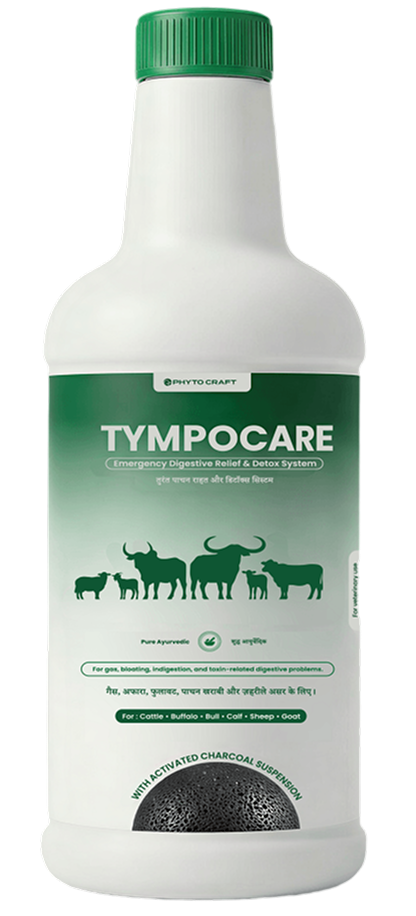
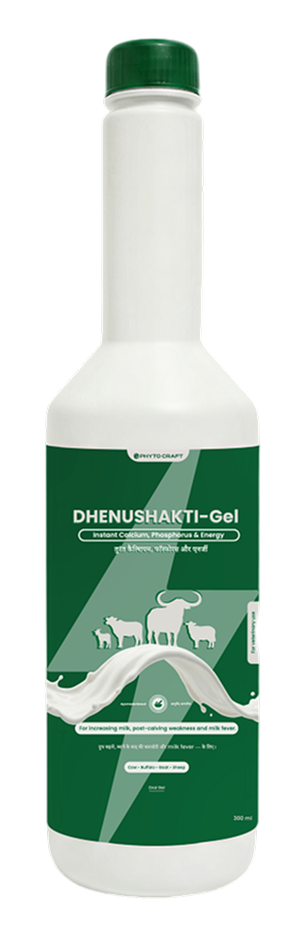
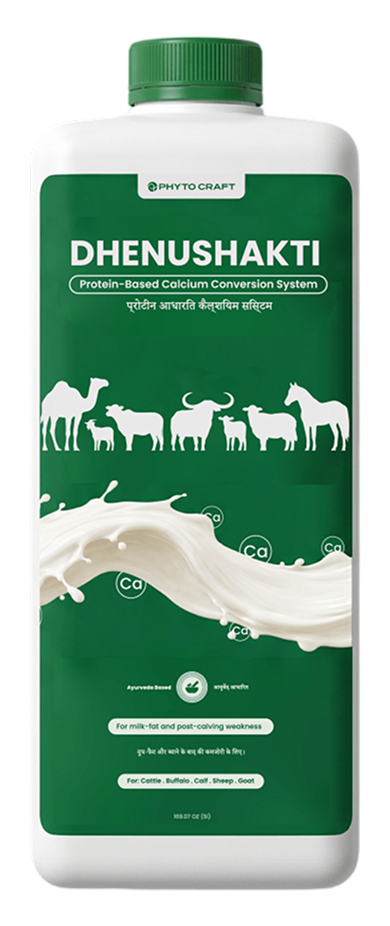
They address completely different biological systems. Dhenushakti addresses calcium and mineral restoration — the skeletal, neuromuscular, and metabolic systems depleted by calving. Calvonil addresses uterine recovery — the cleansing, tissue repair, involution, and hormonal reset the reproductive system needs after calving. They are not alternatives — they address different aspects of the same post-calving recovery period and are ideally used together.

Give Calvonil at 100 ml per day for 5 to 6 days — the upper dose for a difficult or multiple birth. Also assess whether the sheep needs mineral and energy support alongside uterine recovery — Dhenushakti Gel at the small ruminant dose addresses the mineral and energy depletion that three-lamb deliveries cause. If the sheep has fever, is not eating, or is deteriorating, contact your veterinarian immediately — small ruminants with post-partum complications can deteriorate very quickly.

Calvonil is designed for the specific post-partum and post-treatment recovery window — it is not intended as a long-term maintenance product. The uterine-tonic botanical class it contains is appropriate for the post-partum period and should not be used beyond the indicated course duration outside of veterinary guidance. Complete the indicated course and discontinue. If reproductive problems persist beyond course completion, consult your veterinarian.

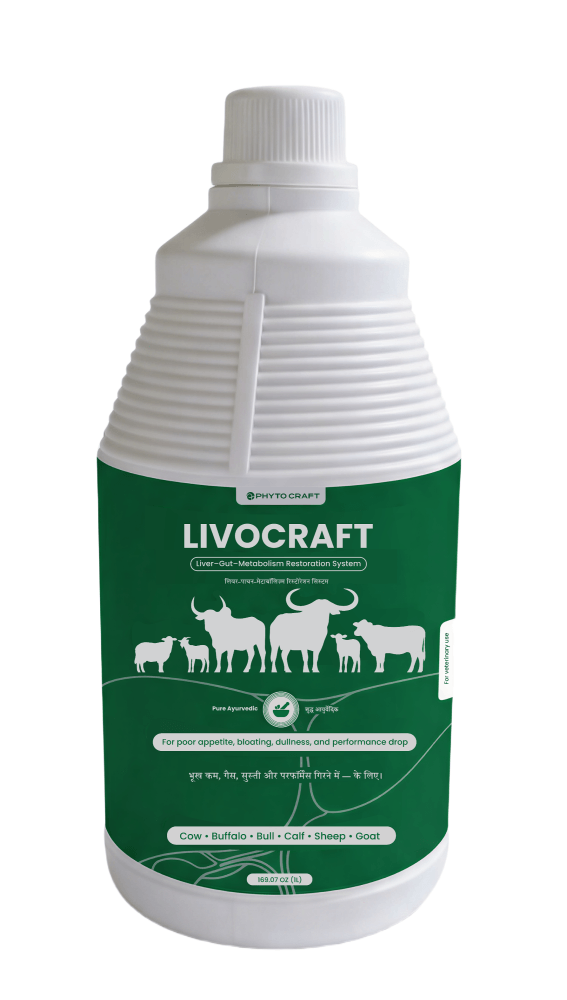
Yes. Calvonil addresses the uterine recovery dimension of post-calving recovery. Other products address different but related dimensions simultaneously — Dhenushakti Gel and Dhenushakti liquid address the mineral restoration, LivoCraft addresses the liver and metabolic recovery, Amritex addresses the vitamin and nutritional restoration. Using Calvonil alongside these products provides complete post-calving biological recovery across all systems — uterine, mineral, metabolic, and nutritional — simultaneously.

Yes — that is an excellent outcome. Heat returning within 21 to 30 days post-calving indicates that uterine recovery was complete and the hormonal axis resumed normal cycling on schedule. This is exactly the outcome Calvonil is designed to support. Ensure the heat is strong and clear before breeding — a well-recovered uterus produces a clear, sustained heat with strong signs. A weak or brief heat at 25 days may indicate the hormonal recovery is still completing — wait for the next cycle if heat expression is not strong.

Our ETHOS

Connect with PhytoCraft

If you believe animal health deserves more depth, more honesty, and more compassion — you are already aligned with our purpose.